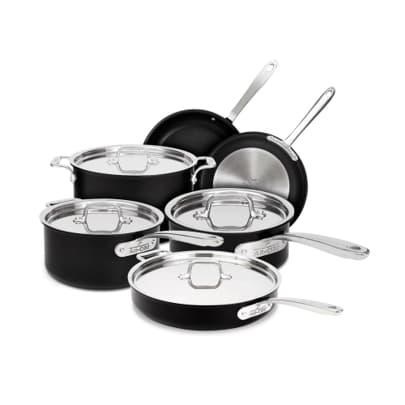
All-Clad is a premium cookware brand where long-term value depends on official support, return policy, and warranty expectations more than a single pan claim. The profile should help shoppers compare construction, service, and alternatives.
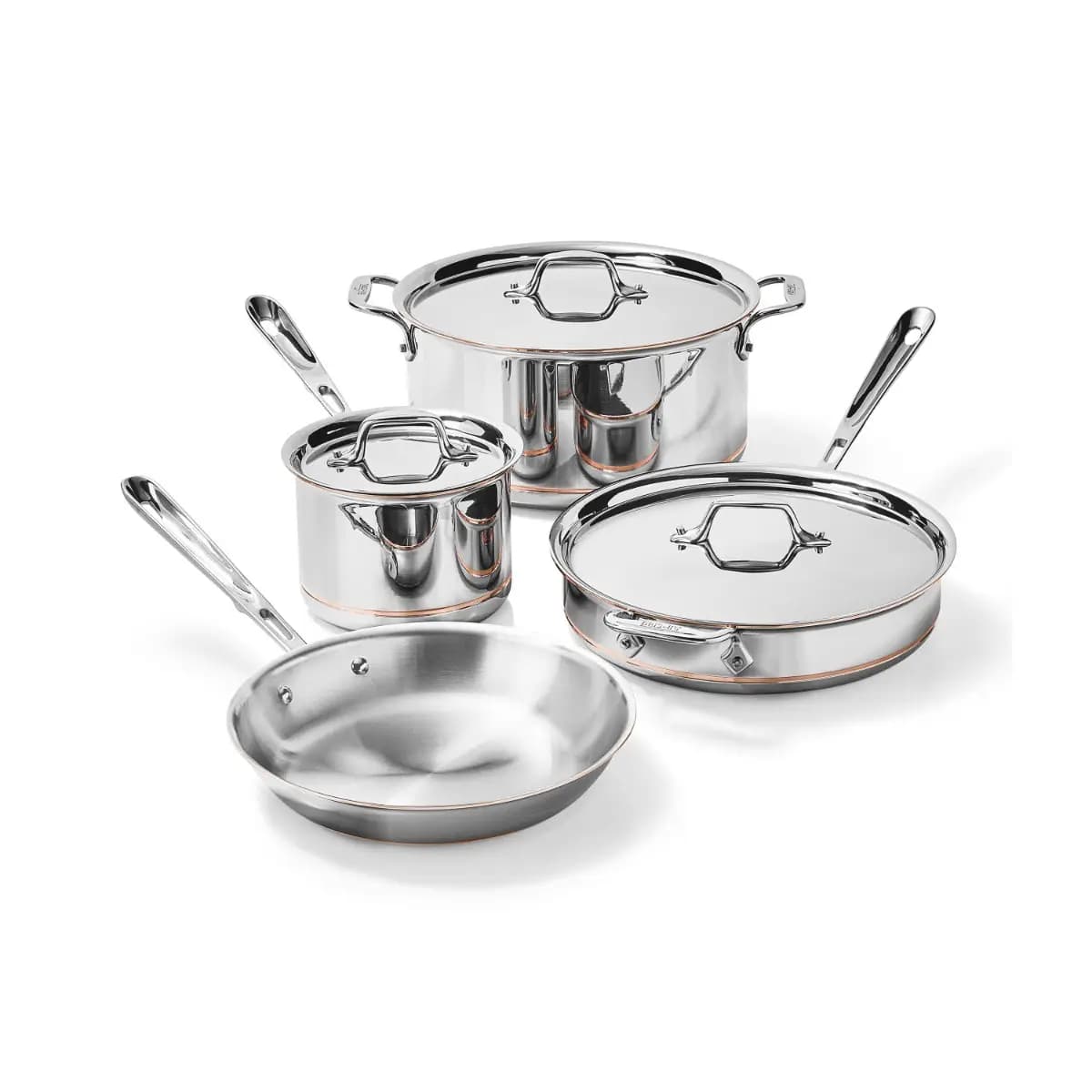
All-Clad can be a good shortlist brand for shoppers who value bonded cookware construction, are comfortable paying a premium, and will compare the exact collection, weight, handle, induction compatibility, set composition, seller, and warranty. Its brand history and U.S. production claims apply at stated collection scope and should not be stretched to every bakeware, accessory, electric, or globally sourced product.[1][2][3][4][5]
Best fit
Cooks comparing fully bonded cookware who value responsive construction, official product documentation, and a published direct-purchase return and warranty route.
Reasons to shortlist
All-Clad clearly identifies fully bonded cookware as a core product family and publishes collection-level origin language rather than one unqualified claim for everything it sells.
The official U.S. site provides product, support, warranty, return, and contact routes that can be checked against the exact collection and seller.
Limits to check
Price, weight, handle shape, set composition, and construction vary by collection, so the brand name alone does not tell you which pan is the best value or ergonomic fit.
Origin details vary by collection; the official statement about fully bonded cookware cannot be generalized to all categories and components.
How this answer was formed: This answer separates Groupe SEB’s portfolio relationship, All-Clad’s 1971 brand history, collection-level manufacturing language, and current seller policies. It does not use U.S. heritage as a quality score.
Groupe SEB presents All-Clad within its multi-brand portfolio and links to the All-Clad site from its brand page.[2]
This supports the portfolio relationship at the check date; it does not prove where an exact product was made or how it performs.
Founded
Source verified
All-Clad’s official site says it began making cookware in 1971.[1]
This supports the brand history and should not be used as the manufacturing date, factory, or origin of a current product.
Headquarters
Unknown
The checked sources support a Canonsburg manufacturing heritage and Groupe SEB portfolio relationship but not a single current headquarters claim for this profile.
A factory location, heritage location, customer-service address, and parent-company headquarters are different facts and should not be merged.
Manufacturing footprint
Scoped evidence
All-Clad says its fully bonded cookware is made in the USA with global components and handcrafted at its Canonsburg, Pennsylvania factory.[1]
The official page says origin can vary by collection. Check the exact product page and label; do not extend this statement to all bakeware, accessories, electrics, or components.
03Before checkout
Official,support,warranty,andreturnroutes
Official U.S. website
Source verified
The checked All-Clad site is the official U.S. brand destination for products, policies, support, and contact.[1]
This verifies the destination, not every retailer, marketplace listing, outlet, or future redirect.
The sources checked for this profile did not establish a single authoritative page that verifies every current U.S. retailer and marketplace seller.
Use the official site and contact route to confirm seller and warranty eligibility when the purchase is not made directly.
No verified route published
04Decision checks
Questionstoanswerfortheexactproduct
01
Collection construction
Which All-Clad construction are you actually buying?[1]
Check: Compare ply count and materials, cooking surface, exterior, thickness where published, induction compatibility, oven limits, lids, and exact included pieces.
Trade-off: A larger set or higher ply count is not automatically better when weight, redundancy, price, and the cooking task are considered.
02
Ergonomics and weight
Can you comfortably lift and control the exact pan when full?[1][4]
Check: Handle the pan when possible, compare empty weight, helper handles, balance, rim, lid, and return policy before committing to a set.
Trade-off: Heavier bonded construction can feel stable and retain heat, but it can be uncomfortable or impractical for some users.
03
Origin priority
Does the exact collection meet the origin requirement you care about?[1]
Check: Read the product page and physical label for the exact SKU and preserve distinctions among made, assembled, and global components.
Trade-off: Brand heritage and a factory statement may be important context but do not replace collection-specific origin evidence or product performance.
05Alternatives with a reason
CompareAll-Cladonaspecificdimension
Made In
Bonded cookware shortlist and direct-to-consumer comparison[1][4][6]
Common ground: Both can appear in a premium cookware shortlist where construction, materials, set composition, and origin claims matter.
Meaningful difference: Made In’s current cookware assortment gives a separate collection-level comparison; handle feel, pricing, published origin scope, seller model, and warranty terms still differ.
Use this comparison when: the shopper wants bonded cookware options and will verify exact product construction and policies rather than treating either brand as a direct dupe.
Supports: The official page states the 1971 history and says fully bonded cookware is made in the USA with global components at the Canonsburg factory, with origin varying by collection.
Does not prove: It is an official brand statement and does not establish independent performance, durability, or the origin of every product category.
Compare first with Made In, Demeyere, and Zwilling when weight, handle feel, induction performance, or set composition matters more than brand recognition.